




Dr. Michael Fulks explores the evolving role of laboratory testing in cancer screening, highlighting both current challenges and areas of continued progress.
Cancers and cardiovascular diseases are the primary conditions causing early mortality among older adults accepted for individual life insurance. Blood, urine, and saliva testing can help identify applicants with higher or lower risk of either and steady progress is being made in refining cardiovascular risk testing, the CRL Advanced Cardiovascular Risk Profile being a recent example.
Cancer prediction has been more problematic. The benefit of such testing from an applicant’s perspective would be to find cancers at a pre-invasive stage or at early invasive stages 1 or 2 where durable remission or cure is much more likely. The benefit from the insurer’s perspective is more accurate and cost-effective risk assessment. The current life insurance laboratory panels (chemistry tests ± CBC, CEA, and PSA) are useful for discovering more advanced cancers (often stage 4) but lack adequate sensitivity and specificity to be useful at earlier stages.
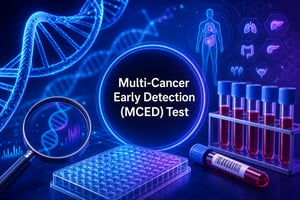
The recent bad news is that the potential alternative of new cancer fluid tests looking for abnormal proteins, DNA, DNA methylation, or other tumor markers has so far largely proven only somewhat more sensitive at early stages than current testing and still has limited specificity resulting in too many false-positive and false-negative results to use for screening low risk populations. The latest negative example is the Galleri blood test from Grail which the company reports failed to reduce the number of more advanced stage 3 and 4 cancers developing during follow-up in a large and closely watched trial. CRL continues to follow this literature closely and often has direct contact with companies researching cancer tests in hopes of bringing them to insurers as soon as practical. Right now, nothing special to report but many research efforts are ongoing. For a non-technical review of multi-cancer early detection (MCED) tests, see this Nature news article, and for a review of the performance of Cancerguard and other MCED tests, see this recent blog by Heather Fehling PhD.
The good news is that overall cancer mortality is decreasing steadily, often through the addition of newer biologic and targeted therapies directed at particular molecular abnormalities commonly associated with cancer cells. Even the recent well-publicized data showing more distal colon and rectal cancer (and mortality) at younger ages is tempered by a steady overall reduction in colon cancer incidence and mortality. For specifics on these trends including 5-year survival ratios, take a look at the latest cancer statistics from CA: A Cancer Journal for Clinicians at https://doi.org/10.3322/caac.70043, and for the increase in younger age colon cancer at https://doi.org/10.3322/caac.70067. Both articles by R.J. Siegel are well written and well illustrated.
About the Author
Michael Fulks, MD, Consulting Medical Director, is board-certified in internal and insurance medicine. After leaving practice, he served as a medical director, creating or editing several underwriting manuals and preferred programs. More recently, Mike has consulted for CRL participating in its mortality research on laboratory test results, BP and build, and in the development of risk-scoring tools for laboratory and non-laboratory data.